What is Gestalt? Understanding the Power of Wholeness

Updated: May 2
“Lose your mind and come to your senses.”
— Fritz Perls
The Need for Completion
Our mind naturally seeks completion. We are constantly trying to make sense of experiences, emotions, and relationships as a whole rather than as disconnected parts. This tendency toward closure is what Gestalt is all about, the idea that the whole carries meaning beyond its individual pieces.
What is Gestalt?

Gestalt, a German word meaning “whole” or “form,” is a psychological approach that views individuals as an integration of mind, body, emotions, and experience.
It is not just a theory, but a way of understanding human experience , where meaning is created through awareness of the present moment.
What is Gestalt Therapy?
Gestalt therapy is a client-centred form of psychotherapy that focuses on the here and now.
Instead of analysing the past, it helps individuals:
Become aware of their thoughts, emotions, and behaviours
Accept their experiences without judgment
Take responsibility for their choices
Develop tools for self-direction and growth
Gestalt is less about fixing and more about becoming aware.
Core Philosophy of Gestalt

At its heart, Gestalt therapy is built on a few deep human ideas that are simple to understand, but powerful when experienced.
Rather than breaking a person down into symptoms or problems, Gestalt looks at the whole individual. It recognises that our thoughts, emotions, body sensations, and experiences are not separate, they are constantly interacting, shaping how we live and relate to the world.
One of the most central beliefs in Gestalt is that awareness itself is healing. When we begin to notice what we feel, how we respond, and what patterns we repeat, something shifts. Change doesn’t need to be forced, it begins naturally through understanding.
Gestalt also moves away from over-explaining. Instead of asking “Why am I like this? ”, it invites a more immediate question:
“What am I experiencing right now?”
This shift brings us out of analysis and into direct experience, where real insight happens.
And perhaps the most powerful idea of all,
change happens through acceptance, not force.
The more we try to become someone we are not, the more stuck we feel. But when we fully meet ourselves as we are, something opens. Growth begins from there.
Key Principles of Gestalt
One of the most fascinating parts of Gestalt psychology is how it explains the way we make sense of what we see.
Our brain doesn’t process things as separate pieces, it instinctively looks for patterns, connections, and meaning. Even when information is incomplete, the mind steps in to organise it into something whole.
These tendencies are known as the laws of Gestalt, and they shape not just how we see visuals, but how we understand experiences too
Law of Closure

The Need to Complete
Even when something is incomplete, our mind fills in the missing parts to create a complete image.
This reflects our deeper psychological need for closure and resolution.
Law of Proximity

What’s Close Feels Connected
Elements placed near each other are automatically seen as belonging together.
Closeness creates a sense of relationship and grouping.
Law of Similarity
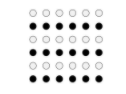
Patterns Create Meaning
When objects look alike: in colour, shape, or size, we group them together.
Similarity helps us quickly identify patterns and structure.
Figure and Ground

What Stands Out Matters
We naturally separate what we focus on (the figure) from the background (the ground).
This shows how attention shapes what we notice and what we ignore.
Law of Simplicity

The Mind Prefers Ease
Also known as the law of Prägnanz, this suggests that we interpret things in the simplest way possible.
The brain avoids complexity whenever it can.
Law of Symmetry

Balance Feels Whole
Symmetrical elements are perceived as unified and complete.
Balance gives us a sense of stability and harmony.
Law of Continuity

Following the Flow
Our eyes prefer to follow smooth, continuous paths rather than abrupt changes.
We naturally see things as part of an ongoing flow or pattern.
Why These Laws Matter
These principles go beyond visual perception. They reflect how we organise thoughts, relationships, and experiences.Just like we complete an unfinished shape, we also try to complete unfinished emotions.
Just like we group similar elements, we group patterns in our lives.
In this way, Gestalt reminds us,
We are always trying to make sense of the world as a whole, not in fragments.
Core Concepts in Practice
Gestalt therapy is guided by a set of core ideas that shape how we understand ourselves and our experiences.
These concepts are not rigid rules, but ways of noticing, helping us become more aware, present, and connected.
Together, they form the foundation of how Gestalt moves us toward growth, clarity, and a sense of wholeness.
Awareness
The foundation of Gestalt is becoming aware of what you are thinking, feeling, and sensing in the present moment.
This awareness isn’t about analysing, it’s about noticing without judgment, allowing change to happen naturally.
Presence
Gestalt brings you into the here and now, away from past regrets or future worries.
By staying present, you begin to experience life more fully rather than living in your thoughts.
Experience Over Explanation
Instead of asking why something is happening, Gestalt focuses on what you are experiencing right now.
This helps you move from overthinking into actually feeling and processing emotions.
Responsibility
Responsibility in Gestalt means owning your thoughts, feelings, and reactions without blaming others.
This shift creates a sense of control and helps you respond more consciously to situations.
Contact
Growth happens at the point of contact , where you meet yourself, others, or your environment.
By noticing these interactions, you begin to understand your patterns and responses more clearly.
Wholeness
Gestalt sees you as a complete person made up of many parts, not something broken to be fixed.
By accepting all parts of yourself, you move toward integration and inner balance.
Creative Exploration
Gestalt encourages trying, noticing, and discovering rather than following rigid methods.
Through small experiments and awareness, you learn more about yourself in real time.

How Gestalt Therapy Works
Gestalt therapy shifts the focus away from analysing the past and brings attention to what is happening right now.
Instead of trying to figure out why something happened, it gently invites you to notice your present experience.
You might be guided to pause and explore simple but powerful questions:
What are you feeling in this moment?
What is happening in your body?
Is there something you are avoiding?
This kind of attention creates something unique, real-time awareness.
And within that awareness, insight doesn’t feel forced. It unfolds naturally, often leading to meaningful and lasting change.
Gestalt Techniques & Exercises
Gestalt therapy uses simple, experiential techniques that help you move beyond thinking and into direct awareness.
These methods are not about fixing you, but about helping you experience
yourself more fully in the present moment.

Role Play
Role play allows you to step into different perspectives and emotions in a safe space.
By acting things out, you begin to understand feelings more deeply rather than just thinking about them.
Empty Chair Technique
This technique helps you have conversations with unresolved parts of yourself or others.
It brings hidden emotions to the surface, allowing clarity, expression, and closure.
Dialogue
Gestalt focuses on real, honest conversation between therapist and client.
Through this, awareness naturally develops as you notice what you feel and express in the moment.
Dream Work
Dreams are explored as reflections of different parts of yourself.
By engaging with them, you gain insight into emotions and experiences that may not be fully conscious.
Body Awareness
Attention is given to body language, sensations, and physical responses.
This helps uncover emotions stored in the body that words alone may not express.
How Gestalt Helps
Gestalt therapy supports individuals in becoming more aware, integrated, and grounded in themselves.
As awareness grows, you begin to notice patterns that once felt automatic — emotional blocks, repeated behaviours, or ways of avoiding certain experiences. Instead of being controlled by them, you start to understand and move through them.
Over time, this leads to a stronger sense of self, healthier relationships, and a more balanced way of responding to life.
Key Benefits
Builds deeper self-awareness
Helps release emotional blocks
Improves relationships and communication
Encourages personal responsibility
Supports self-regulation and growth

Applications of Gestalt Therapy
Gestalt therapy can support individuals across a wide range of emotional and psychological challenges.
Rather than targeting symptoms in isolation, it helps you understand your experience more deeply and respond to it with awareness.
It is commonly used for:
Anxiety – by helping you stay present instead of getting caught in worry or overthinking
Depression – by reconnecting you with emotions, energy, and meaning
Low Self-Esteem – by building awareness and acceptance of self
Relationship Issues – by improving communication and emotional connection
Emotional Disconnection – by helping you feel and express what has been suppressed
The Deeper Essence of Gestalt
Gestalt is not just a method or a set of techniques, it is a way of being in the world.
It shows up in how you notice yourself, how you relate to others, and how present you are in each moment.
At its core, Gestalt lives through a few simple but powerful qualities:
Presence – being fully here, in the moment
Awareness – noticing what you feel, think, and sense
Contact – engaging honestly with yourself and others
Dialogue – creating real, authentic connection
In this space, the therapist is not someone who “fixes” you.
Instead, they walk alongside you, co-experiencing, noticing, and exploring together.
“Awareness in itself is healing.”
— Fritz Perls

A Brief History of Gestalt
Gestalt therapy did not emerge in isolation , it was born out of a moment of questioning.
In the 1940s and 50s, as traditional psychoanalysis focused heavily on the past, there was a growing need for something more immediate, more alive.
It was in this context that Fritz Perls, alongside Laura Perls and Paul Goodman, began shaping what would become Gestalt therapy.
Their work drew from existential philosophy, phenomenology, and humanistic thought, but more than that, it responded to a simple question:
What happens when we stop analysing life and start experiencing it?
Gestalt became their answer, not just as a theory, but as a living, evolving practice.
Gestalt Psychology vs Gestalt Therapy
At its roots, Gestalt began as a way of understanding perception.
Gestalt psychology explored how the mind doesn’t see isolated parts, but naturally organises them into meaningful wholes.
Gestalt therapy carries this idea into human experience.
It recognises that we are not fragmented problems to be solved, but complex wholes to be understood.
Where psychology explains how we see,
therapy explores how we live.

The Paradox of Change
There is a quiet but powerful paradox at the heart of Gestalt.
We often believe that change comes from effort, from trying harder, fixing ourselves, becoming better.
But Gestalt suggests something very different.
Real change begins when we stop trying to become someone else, and instead fully meet who we are.
It is in that moment of honest awareness, without resistance, without force, that something begins to shift.
Not because we pushed it, but because we finally allowed it.
Gestalt as a Way of Life
Gestalt extends far beyond the therapy room.
It shows up in the way you listen to someone without preparing your next response.
In the way you notice your breath when something feels overwhelming.
In the way you stay with an emotion instead of escaping it.
It is not something you “apply.”
It is something you begin to live.
Over time, awareness becomes natural.
Presence becomes easier.
And life feels less like something to control , and more like something to experience.
Gestalt, in its simplest form, is a return ,
to yourself, to your experience, and to the wholeness that was always there.